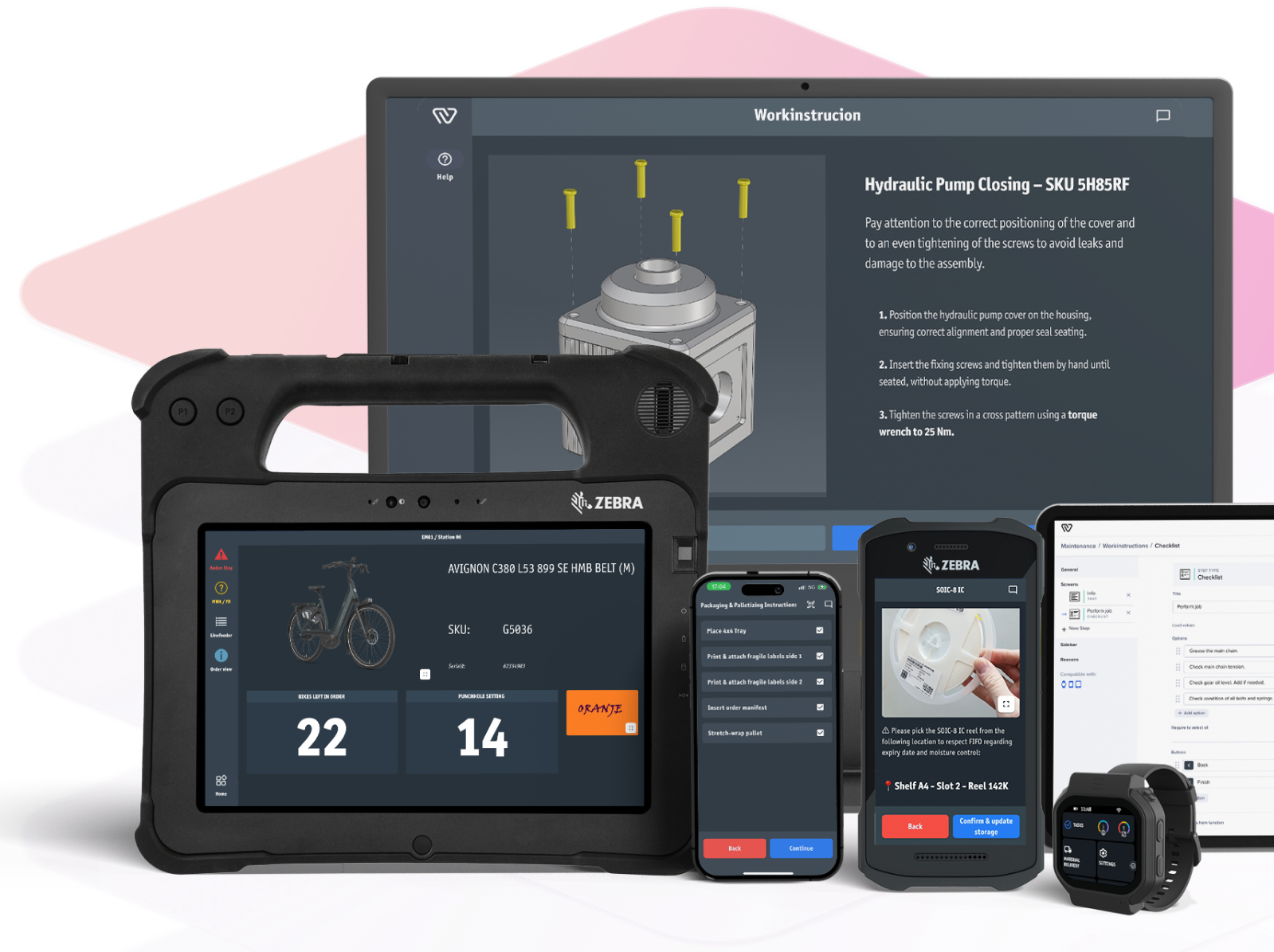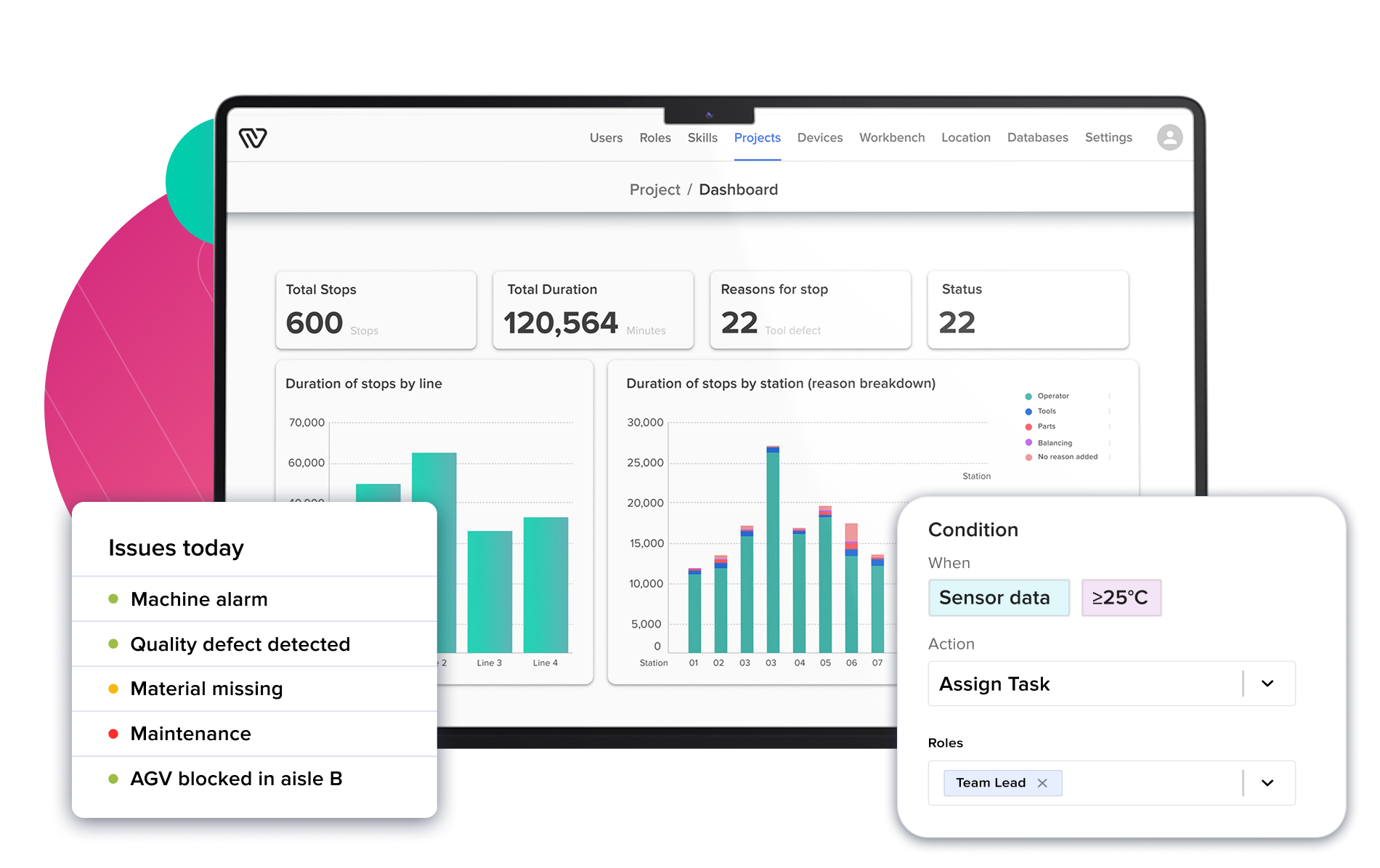
Dashboards that do more than just displaying data
Identify Trends and React Faster Across All Your Operations
Spot patterns before they become problems. Trigger escalations automatically when issues arise. Verify that problems actually get resolved — not just reported. Here are the use cases Workerbase dashboards cover:

Production Tracking

Downtime Monitoring

SQCDP Dashboards

Quality Monitoring

Shift Handovers

HSE Overviews

Andon Boards

OEE Tracking
The Impact on Your Daily Operations
Improve Productivity
Faster Insights
Proactive Reactions
Confidence in Data

Empower your teams across the shop floor
Most manufacturing dashboards display information. Workerbase dashboards take the next steps and use data to enable and verify execution.
No-Code Dashboard Builder
Drag-and-drop configuration lets production engineers build and modify dashboards without IT support or coding skills.
Automatic Escalation & Alerts
When issues arise or tasks fall behind, the right person is notified immediately. No waiting for shift reports or manual follow-up.
Fast Deployment
First dashboards configured and running in under 2 weeks. No six-month implementation project. Start with your biggest visibility gap and expand from there.
System Integration
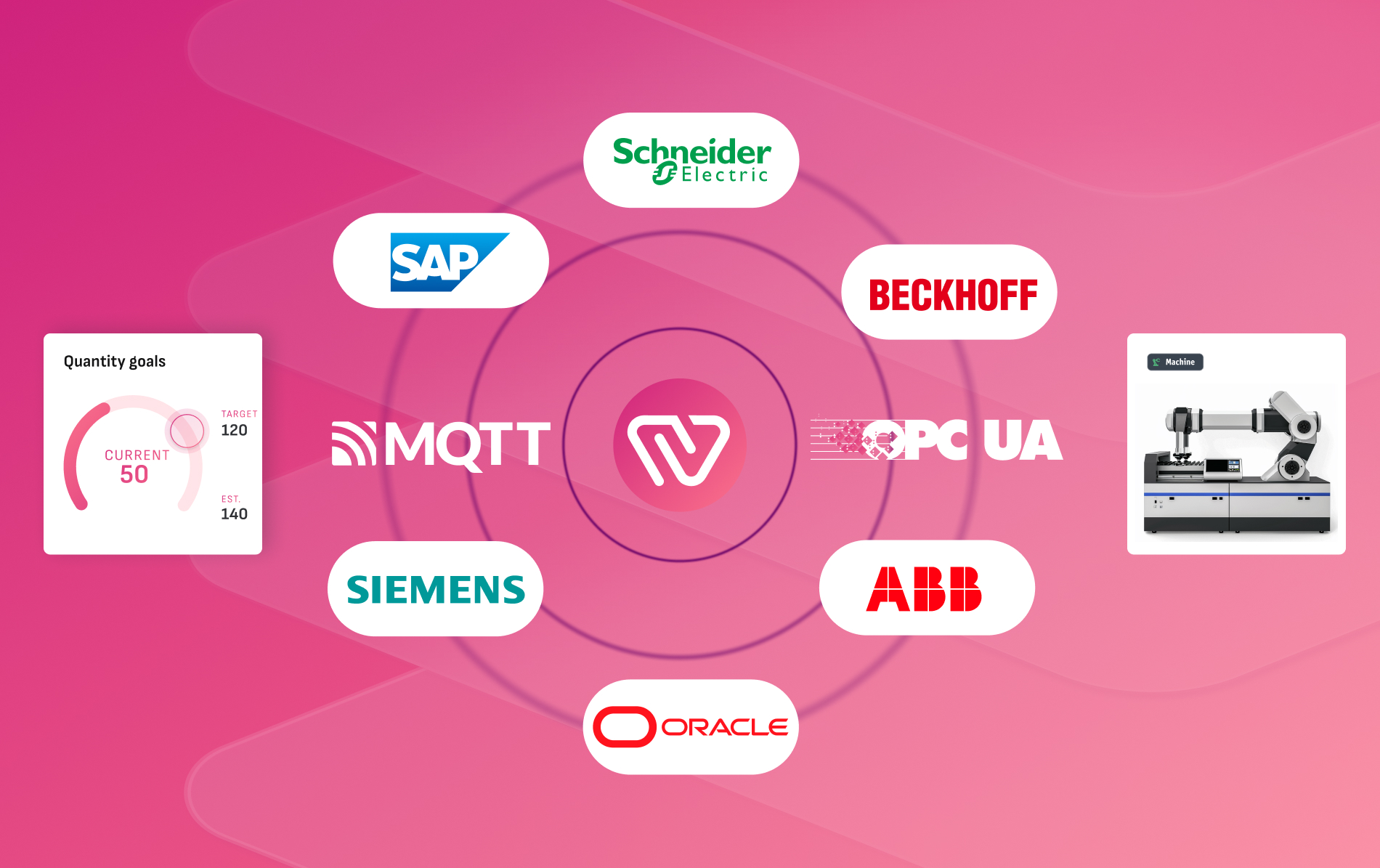
Standard connectors for SAP, Oracle, Opcenter, and others. Pull work orders and overlay execution data without a massive IT project.
How Workerbase's Manufacturing Dashboards Work
Connect to Your Execution Data
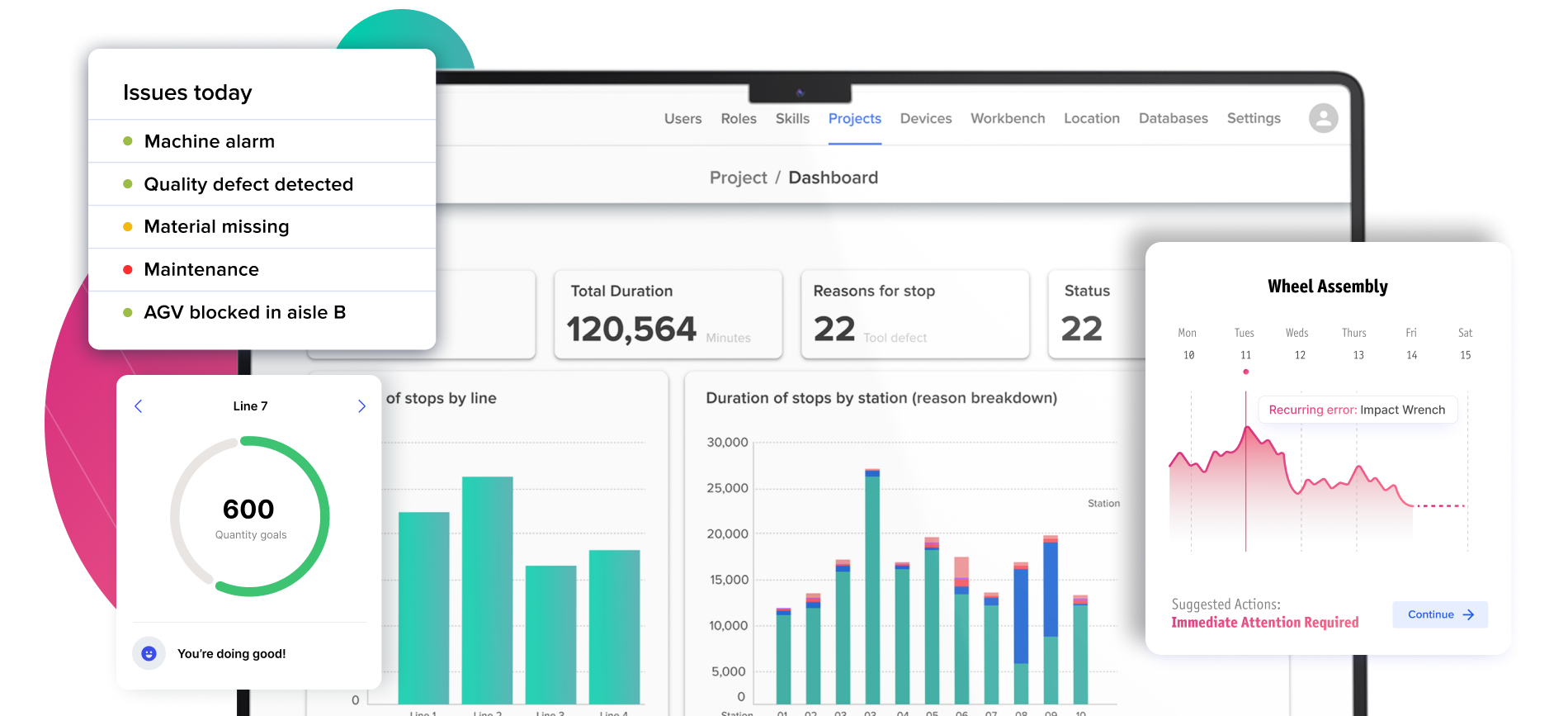
- Dashboards pull directly from operator task completions, checklists, and deviation logs.
- Standard connectors sync with SAP, Oracle, Opcenter, and other existing systems.
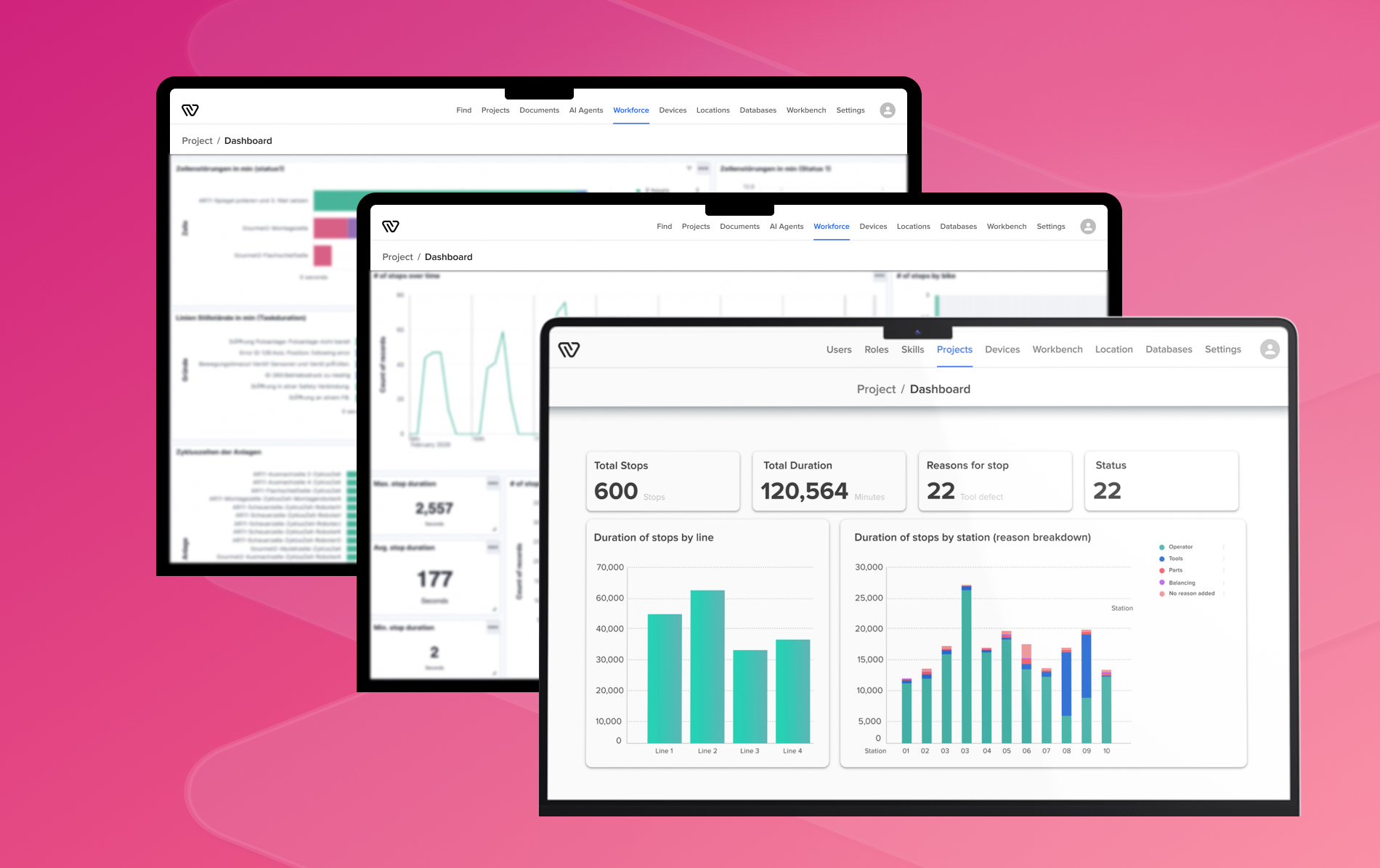
Configure Views for Each Role
- Drag-and-drop builder lets production engineers create dashboards without IT support.
- Set thresholds, escalation rules, and alert conditions specific to your operation.
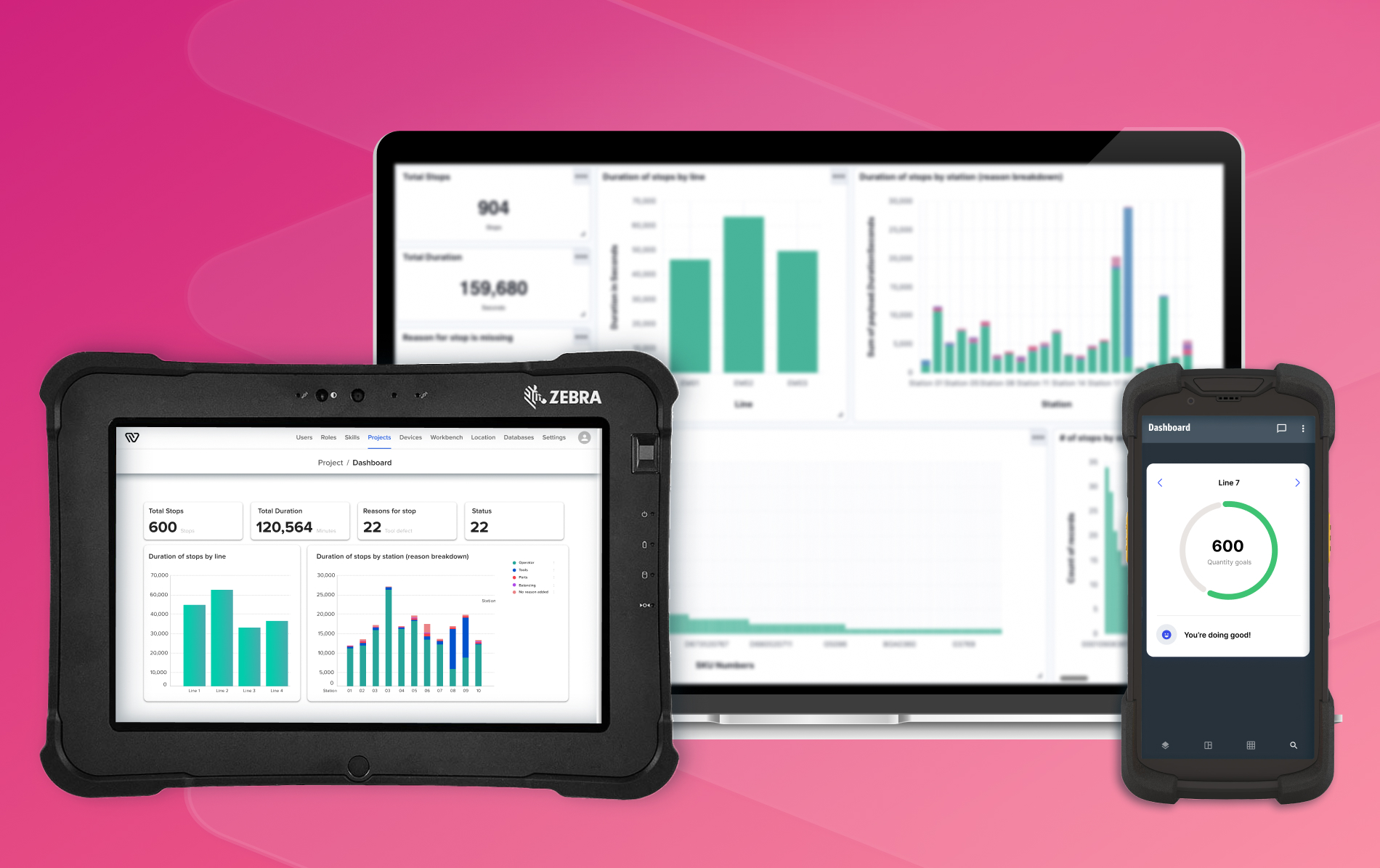
Deploy Across Your Shop Floor
- Display on shop floor monitors, tablets, or laptops with real-time updates.
- Remote access keeps leadership informed from anywhere.
- Role-based permissions ensure each user sees only relevant data.
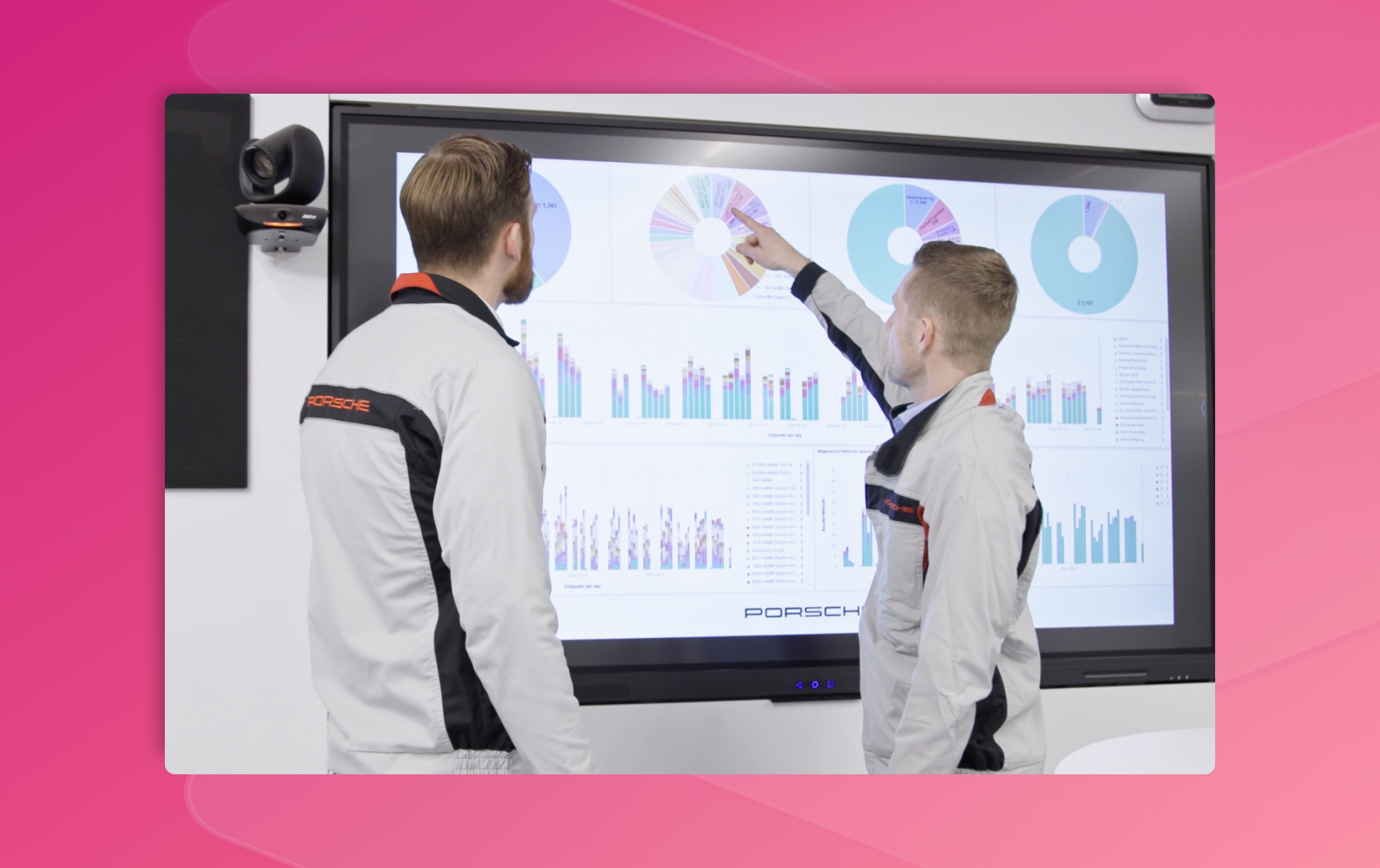
Act on Insights, Improve Continuously
- Update workflows directly in the platform when you spot a pattern.
- Changes deploy instantly — no outdated versions circulating.
- Historical data proves the impact of process improvements over time.
“The Workerbase platform ensures that our processes run smoothly, issues are resolved quickly and production operates with fewer interruptions.”

Jens Brücker – Vice President Plant Zuffenhausen, Porsche
Who this is built for
Manufacturing environments where:
- Humans are the execution layer — work can’t be fully automated
- Verification matters — you need proof work actually happened
- ERP/MES can’t enforce critical frontline execution steps
Production types
High-variability discrete production:
Mixed-model lines, custom orders, frequent changeovers
(Automotive, industrial equipment, electronics, consumer products)
Batch & flow production:
Recipes defined, but execution depends on people following through
(Pharma, food & beverage, process industries, chemicals)
Hybrid & cell-based production:
Job shops, assembly cells, make-to-order